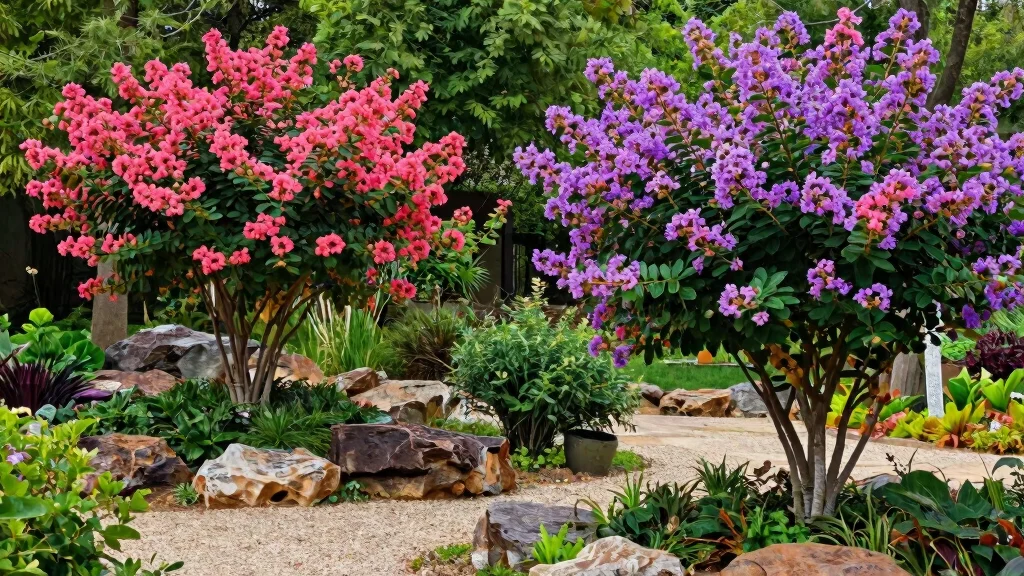
If you’ve been dreaming of a colorful garden that lasts from summer through fall, then you’re in for a treat. Crape myrtles, with their stunning blooms and hardy nature, are a fantastic choice for any garden enthusiast. This post is designed to inspire you with ten creative crape myrtle landscaping ideas that will not only beautify your outdoor space but also withstand drought conditions, making them perfect for xeriscaping lovers.
Whether you’re a seasoned gardener or just beginning to explore the joys of landscaping, this guide will provide valuable insights tailored for you. If you appreciate colorful garden plants and want to create eye-catching displays, you’ll find these ideas straightforward and achievable. You’ll discover practical tips for crape myrtle care, along with innovative landscaping ideas that keep your garden lively and vibrant as the seasons change.
Dive into this collection of breathtaking arrangements that feature crape myrtles as foundational elements. You’ll gain insights into how to arrange these beautiful summer flowering shrubs in your yard. Each idea is designed to bring out the best in your space, creating a sanctuary that you can enjoy from summer into fall.
Key Takeaways
– Crape myrtles are hardy and drought-resistant, making them perfect for xeriscaping and low-maintenance gardens.
– Incorporating colorful crape myrtle borders can enhance your garden’s visual appeal and define spaces.
– Using crape myrtles as focal points in your yard can attract attention and serve as striking backdrops for other plants.
– Mixing crape myrtles with other plants creates diverse textures and colors, resulting in a lush and engaging landscape.
– Seasonal displays with crape myrtles ensure that your garden remains vibrant and interesting throughout the summer and fall months.
1. Colorful Crape Myrtle Borders
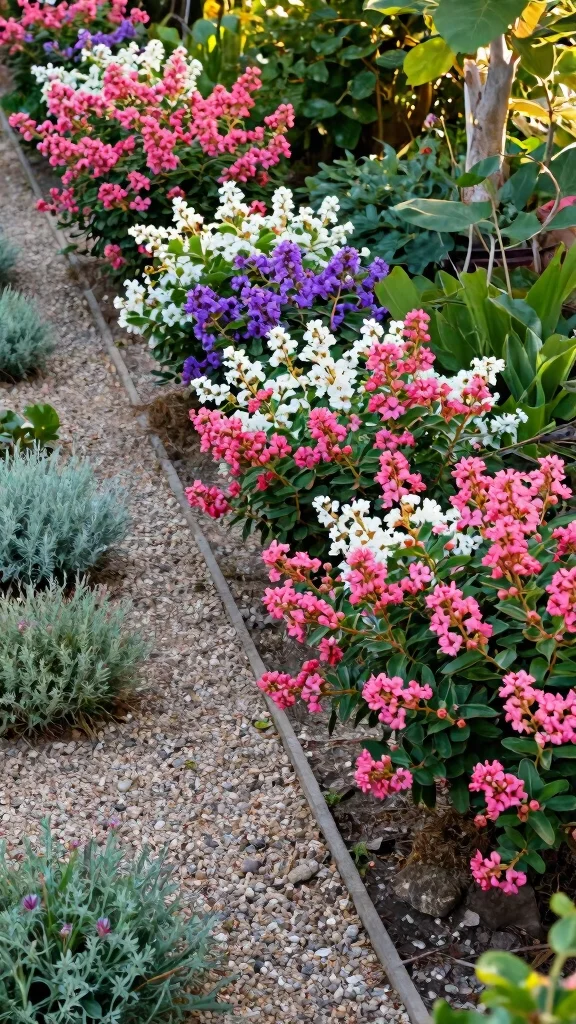
Are you looking to enhance the edges of your garden? A border of crape myrtles can create a stunning and vibrant frame for your landscape. These colorful shrubs thrive along pathways or property lines, and their blooms offer a beautiful display from summer through fall. By selecting different colors, you can achieve a gradient effect or opt for a uniform look that ties your garden together. Proper spacing is essential to ensure each plant has room to breathe and bloom beautifully. Regular pruning in late winter or early spring keeps your crape myrtles healthy and encourages a lush display of flowers.
Start by choosing a sunny location that allows for optimal growth. Consider mixing in perennials that bloom at different times for added interest. Pair them with drought-resistant ground covers to enhance water efficiency and create a cohesive look.
Key steps to design your crape myrtle border:
– Select a variety of colors for visual interest.
– Space plants adequately for air circulation.
– Incorporate perennial flowers that bloom in succession.
This design not only beautifies your property but also creates a welcoming environment for local wildlife.
📹 Related Video: CRAPE MYRTLE CARE SECRETS: Varieties, Care tips & Landscape Design Ideas
Colorful Crape Myrtle Borders
Editor’s Choice

Crepe Myrtle Plant Food — Water Soluble 24oz 8-55-7 — Carl Pool Fertil…


Fiskars Bypass Pruning Shears, 5/8″ Cut Capacity Gardening Scissors, Sel…
GreenView Premium Formula Spring Fertilizer with Crabgrass Preventer 26-…
2. Crape Myrtle as a Focal Point
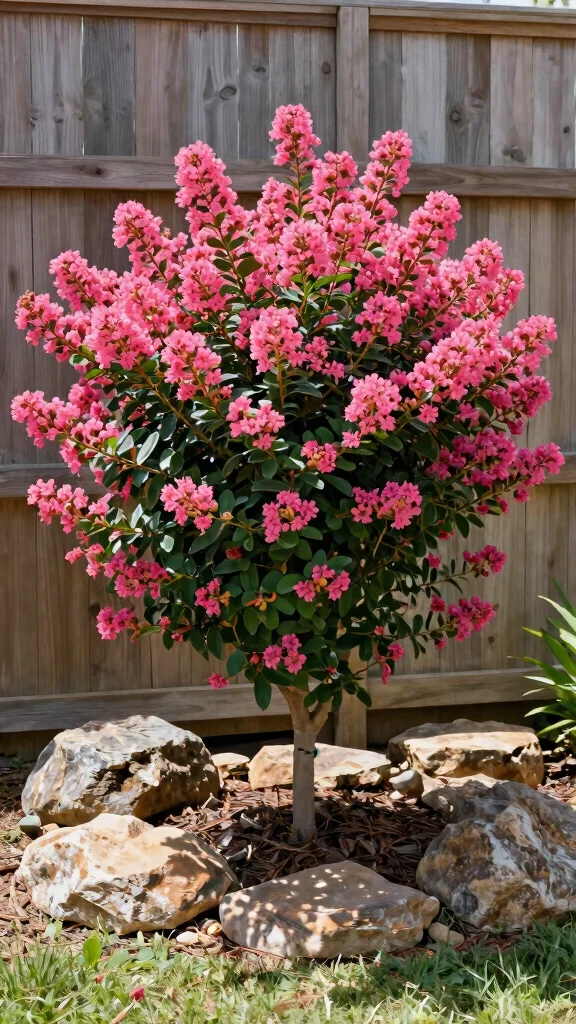
Want to make a statement in your garden? Crape myrtles can serve as eye-catching focal points that draw attention and admiration. Whether grouped together or planted as individual specimens, their vibrant flowers can stand out beautifully against simple backdrops like wooden fences or plain walls. For visual depth, plant taller varieties towards the back while placing smaller ones in front. These shrubs are perfect anchors for other colorful plants, allowing you to create a layered garden that captivates all year long.
Position your crape myrtles near seating areas or pathways to maximize their impact. Ensure they receive plenty of sunlight for the best blooms and consider adding decorative rocks or mulch to retain moisture around their base.
Enhance your garden with these tips:
– Group crape myrtles in clusters for a dramatic effect.
– Ensure they receive full sun for vibrant blooms.
– Add mulch to improve moisture retention.
With thoughtful placement, your garden will transform into a stunning focal point that leaves a lasting impression on every visitor.
Fun fact: A single crape myrtle can bloom for 6–8 weeks each summer, creating a bold focal point. Pair tall backplants with shorter front selections to build depth and color—perfect for eye-catching crape myrtle landscaping.
Crape Myrtle as a Focal Point
Editor’s Choice

Back to the Roots 25.7qt (1 Cubic ft) Organic Premium Mulch
3. Crape Myrtle Patio Enhancements
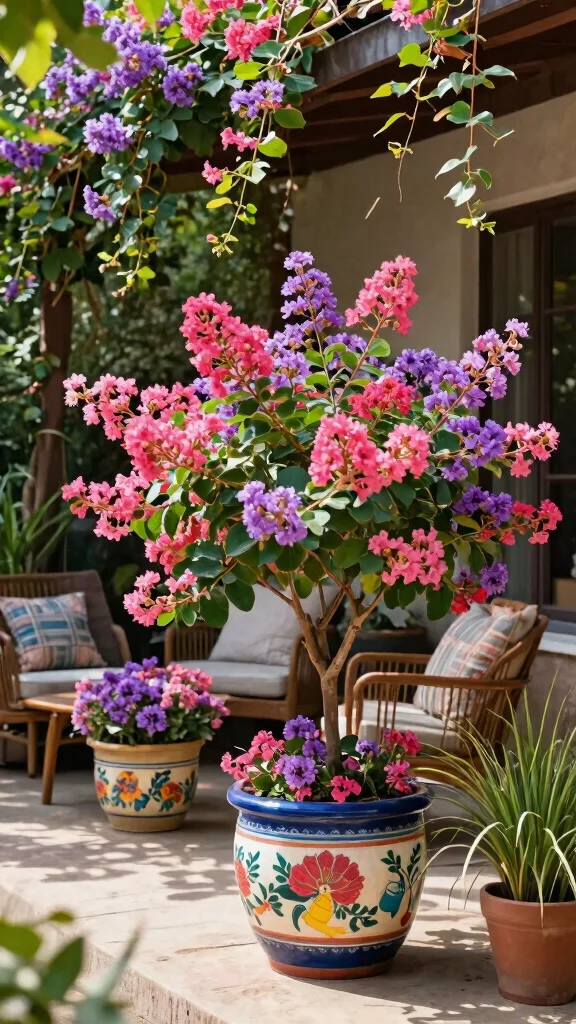
Looking to elevate your patio experience? Integrating crape myrtles into your outdoor space can create a vibrant and relaxing retreat. Picture a cozy area where these flowering shrubs provide both shade and color, inviting you to unwind. Plant them in decorative pots or along the patio edges to seamlessly blend your indoor and outdoor living spaces. Their long-lasting blooms can beautifully frame your sitting area, ensuring beauty all summer long. Consider adding ornamental grasses or trailing vines for a lovely complement.
For container gardening, dwarf varieties work wonderfully to maximize space. Choose colorful pots that harmonize with your crape myrtle blooms for a cohesive look. Position them where they can catch the morning sun for the best floral display.
Key enhancements for your patio:
– Select dwarf crape myrtles for limited space.
– Match pot colors with flower hues for visual appeal.
– Place them where they receive morning sunlight.
Thoughtful placement of crape myrtles turns your patio into a stunning outdoor oasis that’s both functional and inviting.
Fun fact: Crape myrtles can bloom for 6–8 weeks, creating vibrant shade and color along your patio. Plant them in decorative pots or along edges to maximize xeriscaping benefits, reduce watering, and keep beauty all summer.
Crape Myrtle Patio Enhancements
Editor’s Choice

Qsun 7 Pieces Outdoor Patio Furniture Set, PE Rattan Outdoor Wicker Sect…

Grasses: Versatile Partners for Uncommon Garden Design

FaithLand 6-Pack 6-Inch Plastic Plant Pots with Saucers | Thickened PP M…
4. Crape Myrtle and Rock Gardens
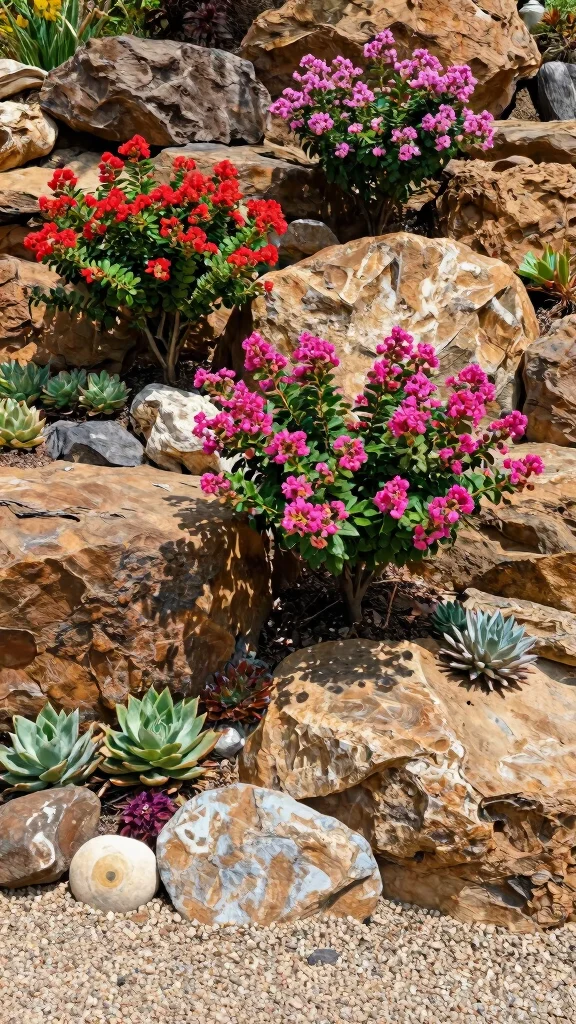
Want to add texture and interest to your rock garden? Crape myrtles thrive in these environments, where their vibrant blooms beautifully contrast with earthy rocks and gravel. For a successful rock garden, choose a sunny spot with excellent drainage since crape myrtles love full sun and are drought-resistant. This approach conserves water and supports native plant species, making it an eco-friendly choice. Pairing crape myrtles with succulents or low-growing plants creates a stunning visual tapestry.
Incorporate larger stones to create focal points alongside your crape myrtles. Mix in smaller plants for varied heights and create winding paths with gravel to enhance visual flow.
Steps to create a captivating rock garden:
– Use larger stones to define sections with crape myrtles.
– Add smaller plants for height variation.
– Design paths with gravel to guide the eye.
This design enhances your landscape while promoting environmental sustainability, making it ideal for xeriscaping.
Crape Myrtle and Rock Gardens
Editor’s Choice

Tonto Crape Myrtle: Vibrant Dark Watermelon Red Blooms on a Fast Growing…

Miracle-Gro Organic Outdoor Potting Mix – Plant Soil for Outdoor Contain…

40 LBS Grey Pea Gravel – Landscape Rocks – Drainage Rock – Gardening – A…
5. Crape Myrtle Mixed Plantings
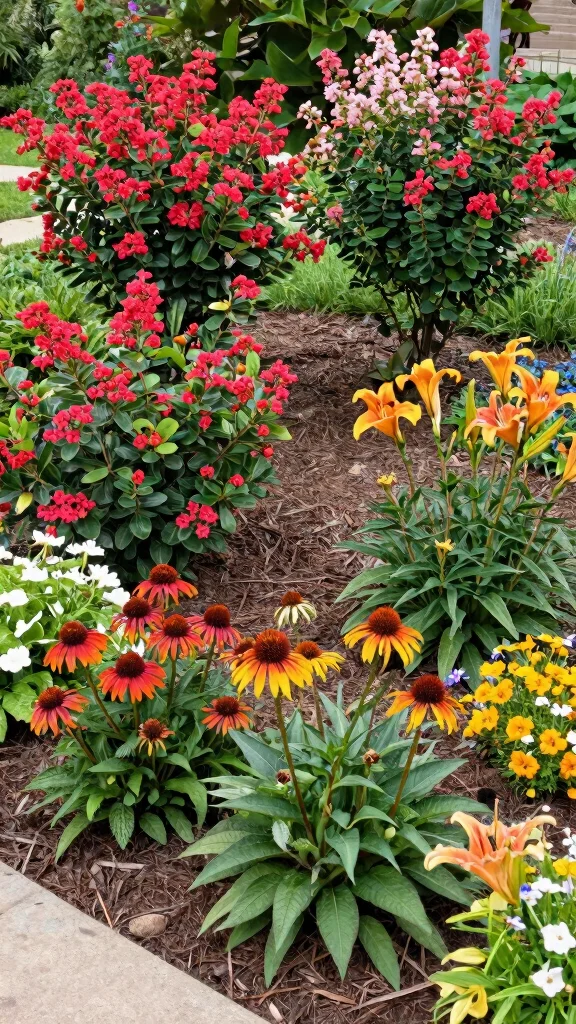
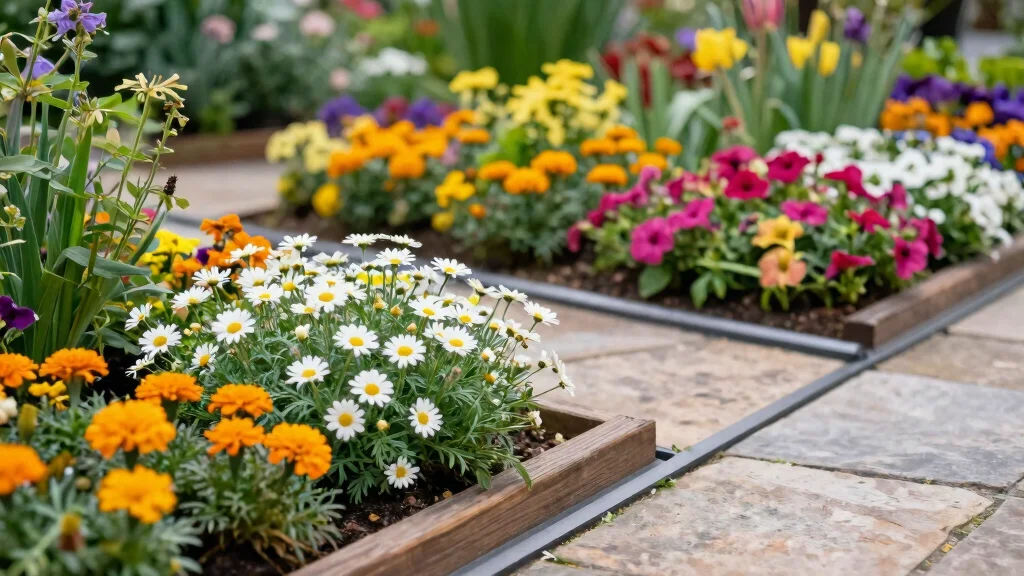
Looking to make your garden more dynamic? Mixing crape myrtles with other colorful plants can create a stunning display of heights, hues, and textures. Pair them with flowering perennials like echinacea or daylilies for a longer bloom season. The key is to combine plants with similar water needs to simplify maintenance. Grouping plants based on their requirements fosters a sustainable garden that thrives with minimal water usage.
Use taller crape myrtles as anchors to support lower-growing plants. Incorporate seasonal bulbs for spring blooms and select plants with staggered blooming times to ensure continuous color throughout the seasons.
Tips for successful mixed plantings:
– Position taller crape myrtles with lower plants for balance.
– Add seasonal bulbs for spring vibrance.
– Choose plants that bloom at different times for year-round color.
This layering technique enriches your garden, ensuring it’s visually captivating all year round.
Mixing crape myrtles with colorful companions boosts crape myrtle landscaping into a dynamic show. Pair them with drought-tolerant perennials like echinacea or daylilies to extend bloom while keeping watering simple. Use taller crape myrtles as anchors and group by water needs for a low-maintenance, xeriscaping-friendly, water-wise garden.
You might also like

Crape Myrtle Mixed Plantings
Editor’s Choice

HealthiStraw GardenStraw, 3 cu ft (20 lbs) All-Natural Mulch for Gardens…

XLUX Long Probe Deep Use Soil Moisture Meter, Water Monitor Indicator Se…
Crepe Myrtle Plant Food — Water Soluble 24oz 8-55-7 — Carl Pool Fertil…
6. Crape Myrtle for Privacy Screens
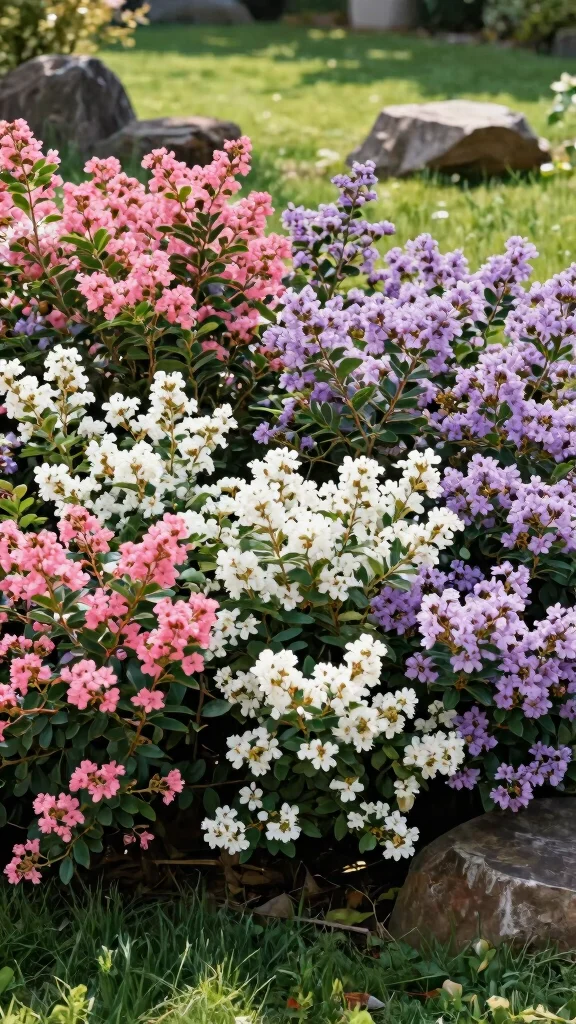
Seeking a natural way to enhance your privacy? Crape myrtles can create a lush and colorful screen around your outdoor space. When planted closely together, they form a dense barrier that not only offers seclusion but also beautifies your landscape. Varying heights and colors can make your privacy hedge visually appealing. Regular pruning is essential to maintain shape and height, ensuring your screen remains manageable.
Choose taller varieties for a more effective privacy solution and plant them in sunny spots for optimal growth. Incorporate climbing plants or vines at the base to add further interest and texture.
Effective strategies for creating a privacy screen:
– Select taller crape myrtles for maximum privacy.
– Focus on sunny areas for better growth.
– Include climbing plants for visual appeal.
This method not only enhances your privacy but also transforms your outdoor space into a beautiful sanctuary.
Ongoing Maintenance & Care Guide
Maintenance Schedule:
Daily/Weekly Tasks:
– Watering: Check soil moisture and water if the top inch feels dry. Aim for deep watering once a week, especially in hot months. ⏱ 10-15 minutes
– Inspect for Pests: Look for signs of insects or disease on leaves and branches. Catching issues early can save your plants. ⏱ 5-10 minutes
– Deadheading Flowers: Remove spent blooms to encourage more flowers. This keeps your crape myrtle blooming beautifully. ⏱ 10 minutes
Monthly/Seasonal Tasks:
– Mulching: Apply a 2-3 inch layer of mulch around the base. This helps retain moisture and suppress weeds. ⏱ 30 minutes
– Fertilizing: Use a slow-release fertilizer in early spring to promote growth. Follow package instructions for best results. ⏱ 15 minutes
– Pruning: Trim back any dead or crossed branches in late winter or early spring. This encourages a healthy shape and growth. ⏱ 1-2 hours
– Pest Control: Apply appropriate treatments if pests are detected. Choose organic options if possible. ⏱ 30 minutes
– Seasonal Checks: In fall, inspect for winter damage and prepare your crape myrtle for colder months. ⏱ 20 minutes
Maintenance Summary Table:
| Task | Frequency | Difficulty | Time Needed |
|————————–|—————|——————-|—————|
| Watering | Weekly | Easy | 10-15 min |
| Inspect for Pests | Daily/Weekly | Easy | 5-10 min |
| Deadheading Flowers | Weekly | Easy | 10 min |
| Mulching | Monthly | Moderate | 30 min |
| Fertilizing | Monthly | Easy | 15 min |
| Pruning | Seasonal | Moderate | 1-2 hours |
| Pest Control | Monthly | Moderate | 30 min |
| Seasonal Checks | Seasonal | Easy | 20 min |
Common Issues to Watch For:
⚠️ Discolored Leaves: Yellow or brown leaves may indicate nutrient deficiencies or overwatering. Check your watering habits.
⚠️ Wilting: If leaves start to droop, it might be thirsty. Inspect soil moisture to see if it needs watering.
⚠️ Stunted Growth: If your crape myrtle isn’t growing, it might need more sunlight or fertilizer. Assess its location and care routine.
⚠️ Bark Damage: Cracks or peeling bark could suggest pests or disease. Examine closely and treat accordingly.
⚠️ Dropping Leaves: Early leaf drop could result from stress, whether it’s from drought or excessive moisture. Track your watering schedule.
Care Tips:
💡 Water Deeply: Instead of light daily watering, soak the roots deeply once a week. This encourages stronger root growth.
💡 Keep It Clean: Rake fallen leaves and debris to prevent fungal issues. A tidy space promotes overall health.
💡 Choose Companion Plants: Mix in drought-resistant plants that thrive with crape myrtles. This creates a harmonious garden space.
💡 Avoid Over-Pruning: Only prune to shape and remove dead branches, not to excess. This helps maintain natural beauty and health.
💡 Watch for Weeds: Keep the area around your crape myrtle free of weeds. Weeds compete for nutrients and water.
By following this care guide, you can ensure your crape myrtle thrives throughout the year. Enjoy the vibrant colors it brings to your landscape, from summer blooms to stunning fall foliage. Happy gardening!
Crape Myrtle for Privacy Screens
Editor’s Choice
Fiskars Bypass Pruning Shears, 5/8″ Cut Capacity Gardening Scissors, Sel…
Crepe Myrtle Plant Food — Water Soluble 24oz 8-55-7 — Carl Pool Fertil…
7. Seasonal Crape Myrtle Displays
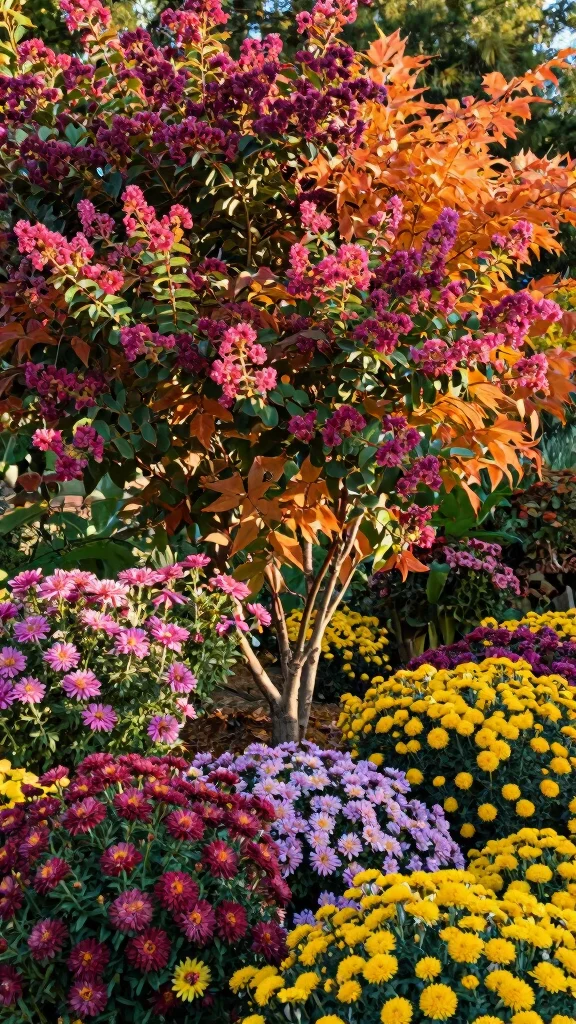
Want to enjoy your garden’s beauty year-round? Crape myrtles can provide stunning seasonal displays that transition gracefully from summer to fall. As their bright blooms fade, the foliage shifts into rich autumn colors, creating a captivating sight. Pair crape myrtles with fall-blooming plants like asters or chrysanthemums to ensure ongoing visual interest. A staggered planting arrangement with varying heights can enhance the beauty of your seasonal display.
Using colorful decorative mulch can further accentuate the seasonal transformation. Incorporating ornamental grasses will add movement, and ensure your plants are spaced for optimal air circulation and growth.
Essential tips for creating seasonal displays:
– Use decorative mulch for added visual appeal.
– Add ornamental grasses for movement and texture.
– Space plants appropriately for healthy growth.
With thoughtful planning, your garden can showcase nature’s beauty throughout every season.
Seasonal Crape Myrtle Displays
Editor’s Choice

Heavy Duty Gardening Tools – Gardening Gifts for Women, Men, Mom, Dad – …

Fox Farm Big Bloom Liquid Plant Food – Organic Bloom Fertilizer for Flow…

EasyFlex No-Dig Landscape Edging with Anchoring Spikes, 2.7 in Tall Deco…
8. Crape Myrtle in Urban Landscapes

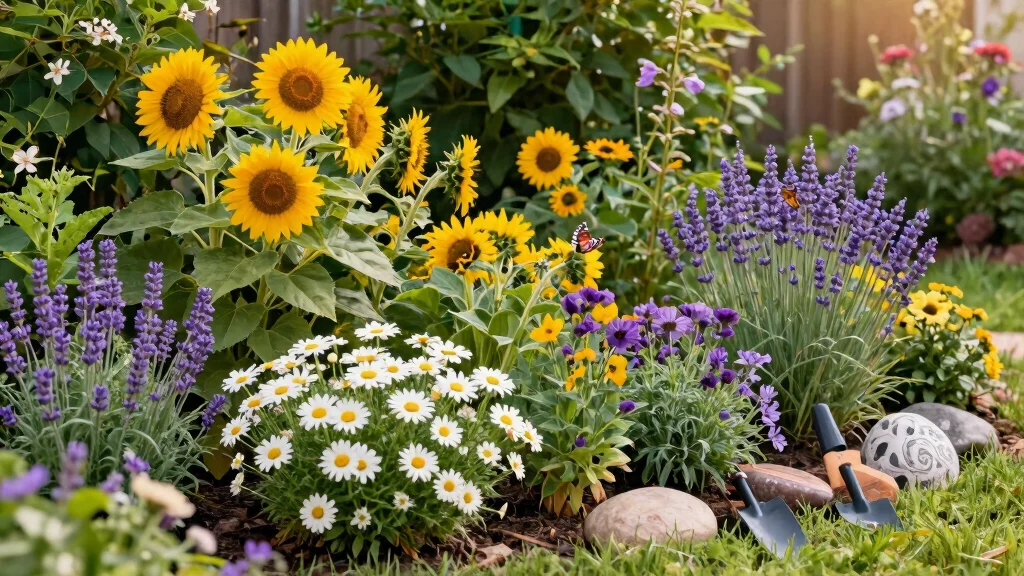
Looking to bring nature to your urban environment? Crape myrtles fit perfectly into city landscapes, adding vibrant color and charm. Their compact size and drought-resistant qualities make them ideal for sidewalks, parks, and small gardens. Plant them in clusters along pathways or in garden beds to create bursts of color amid the concrete. By selecting urban-friendly varieties, you can cultivate a stunning display that thrives in limited spaces.
Position larger varieties as focal points in open areas and mix them with other plants suitable for urban settings. Incorporate decorative gravel or paving to enhance the modern feel of your urban garden.
Key considerations for urban landscaping:
– Use larger varieties for impactful focal points.
– Mix with urban-friendly plants for a cohesive look.
– Incorporate gravel for a stylish modern vibe.
Adding crape myrtles can infuse your city life with tranquility and beauty.
You Might Also Like

Crape Myrtle in Urban Landscapes
Editor’s Choice
Crepe Myrtle Plant Food — Water Soluble 24oz 8-55-7 — Carl Pool Fertil…
Back to the Roots 25.7qt (1 Cubic ft) Organic Premium Mulch

Electric Pink Passion™ Crape Myrtle ~ Southern Charm Crape Myrtles Exc…
9. Crape Myrtle and Wildlife Gardens

Interested in attracting wildlife to your garden? Crape myrtles can play a crucial role in creating a habitat that supports local ecosystems. Their flowers draw in bees, butterflies, and other pollinators, making them an excellent addition to any wildlife-friendly garden. By combining crape myrtles with native plants and wildflowers, you can foster biodiversity while beautifying your space.
To promote a healthy ecosystem, avoid chemical pesticides and focus on organic care methods for your crape myrtles. Planting different varieties will ensure staggered blooms, providing continuous food sources for pollinators.
Effective strategies for wildlife gardens:
– Plant various crape myrtle types for staggered blooms.
– Add native plants to enhance biodiversity.
– Create open spaces for birds and beneficial insects.
This approach turns your garden into a vibrant ecosystem, benefiting both the plants and the wildlife they attract.
Crape Myrtle and Wildlife Gardens
Editor’s Choice
Badger Bug Repellent, Easy to Use Travel Stick, DEET-Free Mosquito Repel…

Lulu Home Wooden Insect House, Hanging Insect Hotel for Bee, Butterfly, …

Outsidepride Dame’s Rocket Flower Seeds – 1 Lb. Perennial, Easy to Grow,…
10. Crape Myrtle Seasonal Color Themes

Ready to create a stunning seasonal color palette? Crape myrtles are perfect for this, allowing you to design a cohesive garden that changes beautifully from summer to fall. Choose darker shades like burgundy and deep red for a dramatic autumn look, while lighter pinks and whites can brighten your summer landscape. By incorporating complementary plants, you can ensure your garden remains visually engaging throughout the year.
When planning your layout, consider how each plant will contribute to your overall seasonal effect. Using color wheels can help you select the best combinations for your garden’s theme.
Steps for crafting seasonal color themes:
– Use color wheels for choosing complementary hues.
– Experiment with planting arrangements for variety.
– Regularly assess and adjust as plants grow.
By implementing these seasonal themes, your garden can remain a beautiful, ever-changing canvas that delights the senses.
Crape Myrtle Seasonal Color Themes
Editor’s Choice

Color Wheel Gardener’s Helps Gardeners Create Exciting Color Combination…

Square Foot Gardening Planner: Layout Guide with Templates for Small Spa…
Crepe Myrtle Plant Food — Water Soluble 24oz 8-55-7 — Carl Pool Fertil…
Conclusion
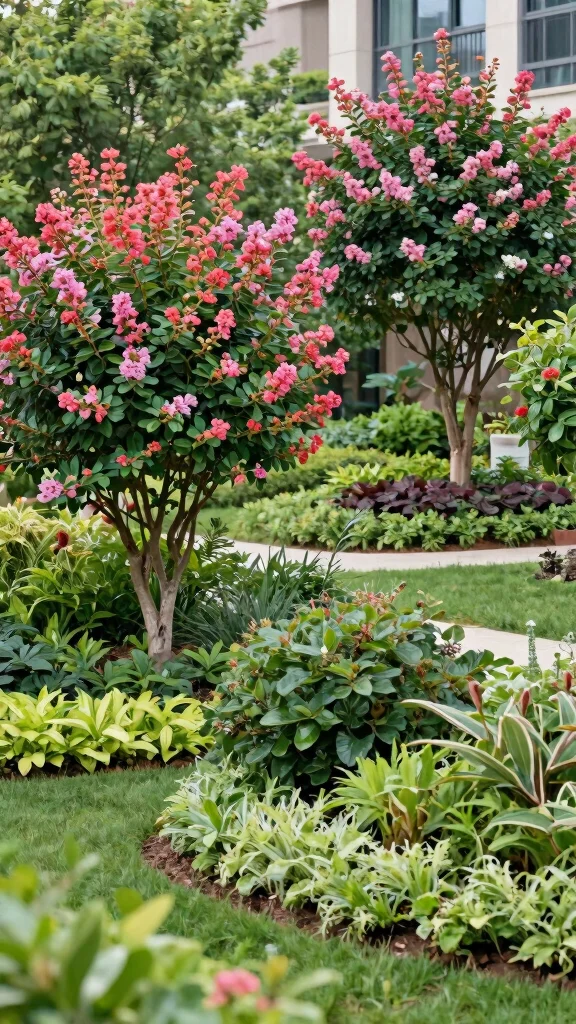
Crape myrtles are versatile, beautiful, and resilient, making them an excellent choice for any garden lover looking to enhance their space. From creating stunning borders and focal points to designing wildlife-friendly environments, these colorful shrubs can adapt to various landscaping styles. By incorporating the ideas shared, you can create a breathtaking garden that flourishes from summer through fall, all while conserving water and supporting local ecosystems. Let the beauty of crape myrtles inspire your next gardening project!
Note: We aim to provide accurate product links, but some may occasionally expire or become unavailable. If this happens, please search directly on Amazon for the product or a suitable alternative.
This post contains Amazon affiliate links, meaning we may earn a small commission if you purchase through our links, at no extra cost to you.
Frequently Asked Questions
What are the best crape myrtle landscaping ideas for a drought-resistant xeriscape that still delivers color from summer to fall?
For a drought-resistant xeriscape, start with crape myrtle landscaping that prioritizes heat tolerance and excellent drainage.
Choose several colorful garden plants that bloom in summer and fall and plant them in sunny groups to improve water efficiency.
Mulch deeply (2–3 inches) and use a drip irrigation system to deliver water directly to roots while reducing evaporation.
Water deeply but infrequently to encourage deep roots, and prune lightly after flowering to keep stems airy and prevent mildew. With the right mix, you get long-lasting color from summer into fall while staying true to landscaping ideas for xeriscapes.
How do I care for crape myrtle in a drought-prone landscape?
In a drought-prone landscape, focus on crape myrtle care that emphasizes low water use.
Water deeply once a week during extended heat, and more often during extreme droughts.
Mulch 2–3 inches to keep soil cool and reduce evaporation. Use a slow-release fertilizer in early spring and avoid over-fertilizing, which can drive lush growth that uses more water.
Prune only as needed after bloom to remove dead wood and maintain a balanced shape; avoid heavy pruning that reduces flowering. With careful watering discipline and proper pruning, your crape myrtle will thrive while keeping water use efficient.
Which crape myrtle varieties provide the brightest summer blooms and fall color for a xeriscaped garden?
Look for heat-tolerant, long-blooming crape myrtle varieties that offer a spectrum of bloom colors and good fall foliage.
Choose a mix of summer flowering shrubs to ensure continuous color, and select varieties that hold their color well into the fall garden design.
Pair taller and compact cultivars to shape the bed and maximize space, then layer with colorful garden plants for a dynamic display from mid-summer through autumn.
What soil, sun, and irrigation practices maximize drought resistance and minimize water use in crape myrtle landscaping?
Plant crape myrtles in full sun with well-draining soil rich in organic matter.
Improve drainage in clay soils and consider raised beds if necessary.
Apply drip irrigation or soaker hoses to deliver water directly to roots, and mulch generously to conserve moisture.
Water deeply and infrequently during dry spells, and space irrigation to avoid wetting foliage. Regularly monitor soil moisture and adjust schedules as temperatures rise or fall.
How can I pair crape myrtle with other drought-tolerant plants to create a colorful, low-water garden from summer to fall?
Create a cohesive, low-water palette by pairing crape myrtle landscaping with other drought-tolerant plants like lavender, salvia, penstemon, yarrow, agave, and ornamental grasses.
Group plants by similar water needs, plant in full sun, and use a unifying color theme to guide combinations for colorful garden plants.
Layer textures with taller shrubs, mid-height perennials, and groundcovers for year-round interest, then finish with a mulch path and a good irrigation plan to keep it vibrant from summer to fall.
Related Topics
crape myrtle landscaping
drought-resistant plants
colorful garden plants
summer flowering shrubs
xeriscaping techniques
fall garden design
easy care landscaping
vibrant outdoor spaces
landscaping ideas
hardy plants for gardens
beginner gardening tips
seasonal color in gardens