
Creating a beautiful backyard can feel overwhelming, especially when you want to add elements that offer both shade and charm. I’ve been diving into ways to enhance outdoor spaces, and I’ve noticed a growing interest in incorporating trees into backyard designs. This post is all about helping you discover how to elevate your garden aesthetics with trees that provide cooling shade, lush structure, and a splash of natural beauty.
If you’re someone who loves gardening or spends time in outdoor living areas, then you’re in the right place. You’ll find that carefully selected trees can transform small backyards into inviting retreats. Not only do they enhance the look of your space, but they also create a comfortable environment for relaxation and play. In this guide, you’ll learn about seven specific tree options that will spruce up your backyard while offering practical benefits like shade and natural beauty.
Let’s jump into some fantastic options that will inspire you. You’ll find practical insights on maintaining these trees and how to weave them into your landscape design for a cohesive and charming outdoor space. With the right trees, your backyard can become a personal paradise that you and your loved ones can enjoy for years to come.
Key Takeaways
– Explore seven ornamental trees that provide beautiful shade and structure for small backyards, enhancing your outdoor living space.
– Learn about specific tree varieties like Dwarf Japanese Maple and Flowering Dogwood that add color and seasonal interest to your garden.
– Discover the importance of tree maintenance and care to ensure your backyard trees thrive and continue to beautify your space.
– Understand how these trees can improve your garden aesthetics, creating an inviting retreat for relaxation or entertaining guests.
– Get practical tips on integrating these trees into your overall landscape design, ensuring they complement your existing outdoor elements.
1. Dwarf Japanese Maple: A Colorful Accent
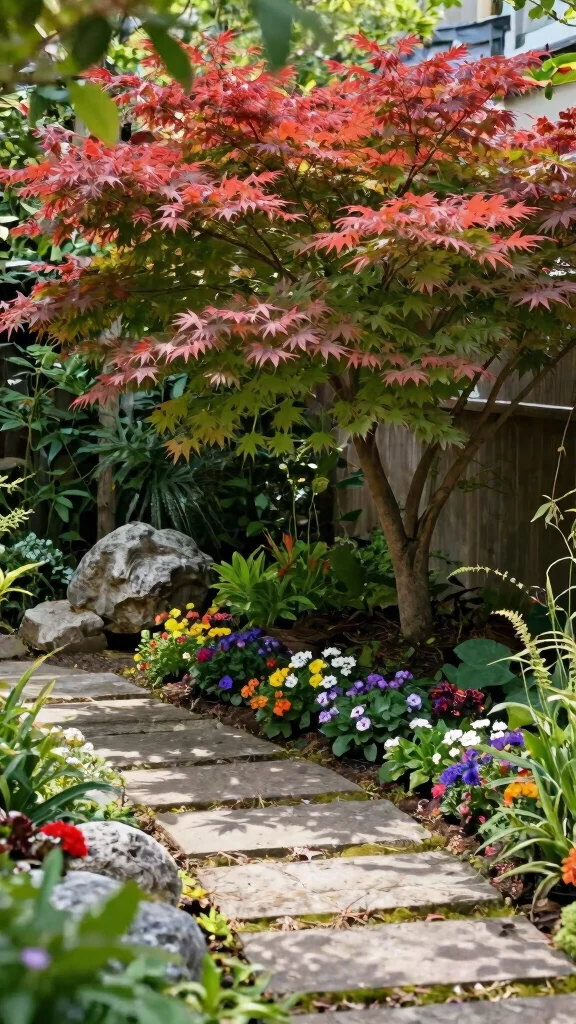
If you’re looking for a striking addition to your small backyard, the Dwarf Japanese Maple is a perfect choice. With its delicate leaves in stunning shades of red, purple, or green, this tree brings vibrant color that changes with the seasons. Reaching only 3-5 feet tall, it fits beautifully in cozy corners or as a charming centerpiece.
These trees thrive in partial shade, offering a graceful, cascading form that enhances your garden’s beauty. Consider placing them along pathways or patios, where their intricate leaf patterns can be admired up close. Pair them with decorative stones or mulch to define their space and create an inviting atmosphere. With minimal maintenance, just ensure they have well-draining soil and enough moisture to flourish.
Key features of Dwarf Japanese Maples:
– Enjoy vibrant leaf colors throughout the seasons.
– Perfect for small spaces and cozy corners.
– Requires minimal care with proper soil and moisture.
– Offers stunning fall foliage for seasonal beauty.
This enchanting tree not only enhances your garden’s aesthetic but also transforms it into a tranquil retreat you’ll love to enjoy.
📹 Related Video: Caring for a little Japanese Maple #bonsai #care #maple
Dwarf Japanese Maple: A Colorful Accent
Editor’s Choice

Trees, Shrubs & Hedges for Your Home: Secrets for Selection and Care (Cr…


Burpee, 9 Quarts | Premium Organic Potting Natural Soil Mix Food Ideal f…
2. Flowering Dogwood: Seasonal Delight

Looking to add beauty and shade to your backyard? The Flowering Dogwood is an excellent choice that blooms with captivating white or pink flowers in spring. Growing up to 15-25 feet tall, this ornamental tree fits beautifully into small spaces, creating a lovely focal point.
These trees thrive in well-drained soil and enjoy partial shade, making them suitable for areas that receive a mix of sun and shade. With unique horizontal branches, they provide delightful structure to your garden, while their fall foliage dazzles in rich yellows and fiery reds. Keep them well-watered during dry spells and mulch around their base to retain moisture for optimum growth.
Here’s how to make the most of your Flowering Dogwood:
– Plant in well-drained soil for optimal growth.
– Provide partial shade to protect from harsh sun.
– Water regularly during dry periods for healthy blooms.
– Enjoy stunning seasonal colors all year round.
This tree not only enhances your outdoor space but also attracts pollinators, contributing positively to your backyard ecosystem.
Flowering Dogwood: Seasonal Delight
Editor’s Choice

Pink Flowering Dogwood Tree – Live Plant – 2-3 feet Tall Seedling – 3×6’…

Rapitest Soil Test Kit for Gardens, Vegetables, Flowers and Lawns. USA d…
3. Eastern Redbud: A True Showstopper
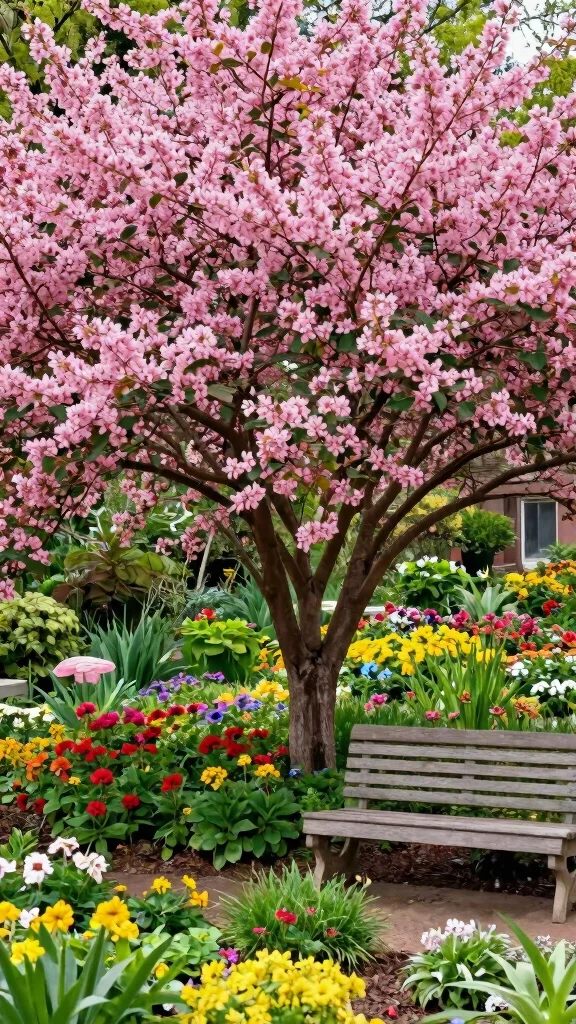
Want to bring vibrant color to your backyard? The Eastern Redbud is a must-have with its soft pink flowers that bloom in early spring, filling your garden with life. Growing between 20-30 feet tall, it adds height and drama without overwhelming smaller spaces.
Plant it in full sun to partial shade, and watch it adapt to various soil types. Its heart-shaped leaves form a lush canopy, perfect for enjoying cool shade on warm days. Enhance its beauty by planting colorful annuals or perennials around its base for a stunning display. Regular watering during the establishment phase ensures healthy growth, and minimal pruning helps maintain its shape.
Essential tips for your Eastern Redbud:
– Choose a sunny to partly shaded location for best results.
– Water regularly during the establishment phase.
– Add colorful plants around its base for added vibrancy.
– Enjoy gorgeous yellow fall foliage for seasonal charm.
This tree not only beautifies your space but also keeps your garden captivating throughout the year.
Did you know the Eastern Redbud can reach 20-30 feet, delivering shade and vibrant pink color for small yards? It adds height without crowding the space, ideal for backyard trees landscaping. Plant in full sun to partial shade for a heart-shaped canopy and cool shade on warm days.
Eastern Redbud: A True Showstopper
Editor’s Choice

Bully Tools 11-Gauge Dibble Bar Tree Planting Tool | Heavy Duty All-Stee…

Hachiman Large Watering Can – 5 L Plant Watering Can with Widened Spout …

ZeeDix 6 Pack Coconut Fiber Mulch Ring, 24 Inch Coco Coir Tree Ring Mulc…
4. Serviceberry: Edible Beauty

Looking for an ornamental tree that offers delicious rewards? The Serviceberry is a wonderful addition, featuring lovely white flowers in spring that lead to sweet fruits in early summer. Growing between 15-25 feet tall, it fits perfectly into small spaces while providing both shade and visual interest.
These trees thrive in full sun but can adapt to partial shade, making them versatile for various garden placements. Their leaves turn a brilliant orange in the fall, offering a stunning seasonal display. Plus, the berries are a tasty treat for both birds and humans! Plant them near patios or walkways for easy access to the fruits, and consider adding complementary plants that highlight their seasonal changes.
Key benefits of planting Serviceberries:
– Enjoy beautiful blooms and delicious berries.
– Thrives in both sun and shade for versatile planting.
– Provides stunning fall color for seasonal interest.
– Attracts wildlife, enhancing your garden ecosystem.
This tree not only delights the senses but also turns your garden into a vibrant, inviting space.
You might also like

Top Varieties for Different Conditions
Dwarf Japanese Maple
– Best conditions: Ideal for temperate climates and small spaces.
– Key features: This tree brings stunning red or purple leaves that change colors throughout the seasons. Its compact size makes it perfect for small gardens or patios.
– Considerations: It needs well-drained soil and some shade to thrive. Too much direct sunlight can scorch its delicate leaves.
Flowering Dogwood
– Best conditions: Works well in humid regions with rich, moist soil.
– Key features: Known for its beautiful pink or white flowers in spring, the flowering dogwood also provides red berries in fall which attract birds.
– Considerations: It prefers partial shade and can struggle in overly dry conditions.
Eastern Redbud
– Best conditions: Thrives in a variety of soil types, making it versatile for many backyards.
– Key features: This tree showcases striking pink flowers in early spring, offering a burst of color before many other trees bloom.
– Considerations: It grows best in full sun to partial shade and may require regular watering during dry spells.
Serviceberry
– Best conditions: Suitable for cooler climates with good drainage.
– Key features: Serviceberries not only provide lovely white flowers in spring but also produce sweet, edible berries in summer—perfect for snacking!
– Considerations: They prefer well-drained soil and can be vulnerable to pests if not maintained regularly.
Laceleaf Maple
– Best conditions: Prefers cool, moist climates and thrives in partial shade.
– Key features: With its weeping branches and finely cut leaves, this tree creates a unique focal point in any garden. The bright red foliage in the fall is especially stunning.
– Considerations: It requires careful pruning to maintain its shape and can be sensitive to extreme heat.
Crabapple
– Best conditions: Does well in both temperate and continental climates with well-drained soil.
– Key features: This tree brings delightful spring blossoms and small, colorful apples that add charm and attract wildlife.
– Considerations: Be mindful of its susceptibility to certain diseases. Regular maintenance can help keep it healthy.
Magnolia
– Best conditions: Perfect for warmer, humid areas where it has room to grow.
– Key features: Magnolias offer large, fragrant flowers and glossy leaves, creating a striking presence in any garden.
– Considerations: It requires ample space to thrive and may not do well in colder climates.
Climate/Condition Guide:
When choosing your backyard trees, consider your local climate. For example:
– Temperate: Look for trees like the Dwarf Japanese Maple and Eastern Redbud that can handle varying temperatures.
– Continental: Choose hardy trees like the Crabapple that can withstand temperature extremes.
– Coastal: Serviceberries and Flowering Dogwoods thrive with the moisture and mild conditions found near the coast.
– Hot/Dry: Laceleaf Maples can struggle unless given plenty of shade and water; consider other drought-resistant options.
– Humid: Magnolias and Flowering Dogwoods thrive in moisture-rich environments.
Growing Tips:
– Always check your soil type before planting. Some trees require well-drained soil while others thrive in moist conditions.
– Regular pruning helps maintain shape and health; this is especially important for trees like the Laceleaf Maple and Crabapple.
– Ensure adequate sunlight for your chosen trees. Some trees do best in full sun, while others prefer partial shade.
Avoid:
– Don’t overwater your trees; too much moisture can lead to root rot, especially for varieties like the Dwarf Japanese Maple.
– Avoid planting trees too close together. Give them room to grow and develop their full beauty.
Serviceberry: Edible Beauty
Editor’s Choice

100+ Saskatoon Serviceberry Seeds for Planting – Amelanchier alnifolia…

Espoma Organic Tree-Tone 6-3-2 Natural & Organic Fertilizer and Plant Fo…

Back to the Roots 25.7qt (1 Cubic ft) Organic Premium Mulch
5. Laceleaf Maple: A Cascading Wonder
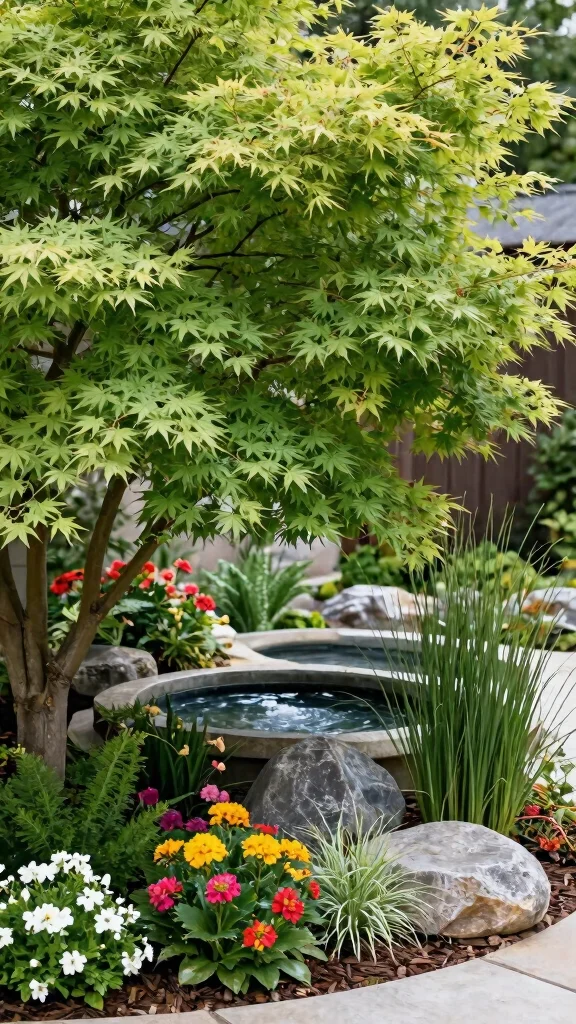
Searching for a unique silhouette in your backyard? The Laceleaf Maple, also known as weeping maple, is enchanting with its finely dissected leaves that cascade elegantly from its branches. Growing up to 10-15 feet tall, it’s perfect for smaller spaces or as a dramatic statement piece.
This tree thrives in well-drained soil and enjoys partial shade, protecting its delicate leaves from scorching summer heat. Consider placing it near a water feature or in a corner garden to highlight its natural beauty. Seasonal changes bring delightful displays, boasting bright greens in spring and deep reds in fall. Regular watering and protection from strong winds are key to maintaining its health.
Explore the beauty of Laceleaf Maples:
– Create a stunning focal point in any garden.
– Enjoy vibrant seasonal colors all year.
– Protect from strong winds for optimal health.
– Integrate with other plants for a layered design.
This unique tree adds depth to your garden, ensuring it always catches the eye and brings tranquility.
Fun fact: Laceleaf Maples grow to 10–15 feet tall, with cascading, finely dissected leaves that mesmerize from every angle. In small backyards, place one near a water feature for cool shade and dramatic structure—perfect for authentic backyard trees landscaping.
Laceleaf Maple: A Cascading Wonder
Editor’s Choice

GROWIT Plant Moisture Meter – Accurately Tells You When to Water Your Pl…
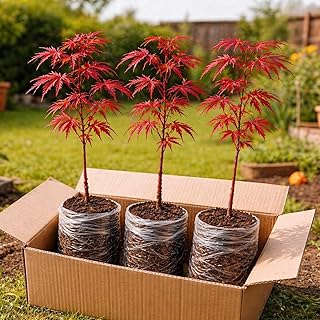
3-Pack Japanese Red Maple Seedlings (12-18″ Tall) – Dormant Bare Root …
6. Crabapple: A Multifunctional Gem
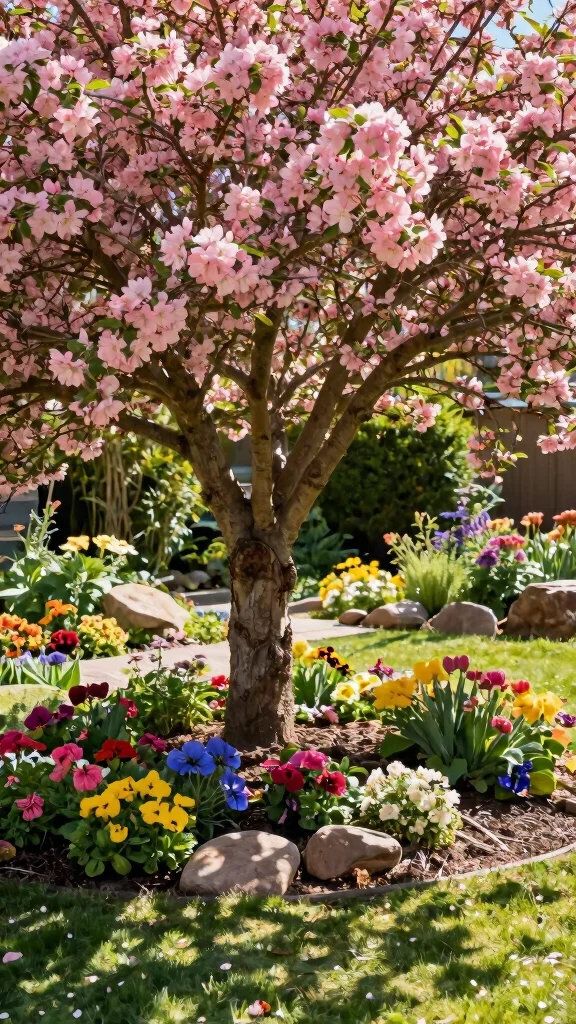
Want a tree that offers beauty and utility? The Crabapple tree is a delightful addition, known for its vibrant spring blooms ranging from white to deep pink. These trees produce small apples that attract wildlife and can be used for jellies and jams. Growing between 15-30 feet tall, they fit well into various landscape designs.
Crabapples thrive in full sun and can adapt to a range of soil types, making them versatile for different garden settings. They develop a sturdy structure that provides ample shade during hotter months. Plus, they are low-maintenance, needing just occasional pruning to stay healthy.
Here’s how to maximize your Crabapple tree:
– Plant in full sun for best blooms and fruit.
– Prune occasionally to maintain shape and health.
– Use along pathways for stunning blooms and aroma.
– Enjoy colorful berries that enhance garden aesthetics.
This tree not only beautifies your backyard but also adds a delightful sensory experience with its blooms and fruits.
Crabapple trees top out at 15-30 feet, delivering shade and structure for small backyards. Their spring blooms—ranging from white to deep pink—attract wildlife, while the tiny fruits are perfect for jellies and jams. It’s a practical, beautiful choice for backyard trees landscaping.
You Might Also Like

Crabapple: A Multifunctional Gem
Editor’s Choice

Crabapple Tree Saplings – 3 Live Crab Apple Trees for Planting, Cold H…

Miracle-Gro Tree and Shrub Plant Food Spikes – Deciduous, Flowering & Ev…

Organic Coco Chips for Plants (10lbs) – Coco Coir Chips – Coconut Husk C…
7. Magnolia: Southern Charm
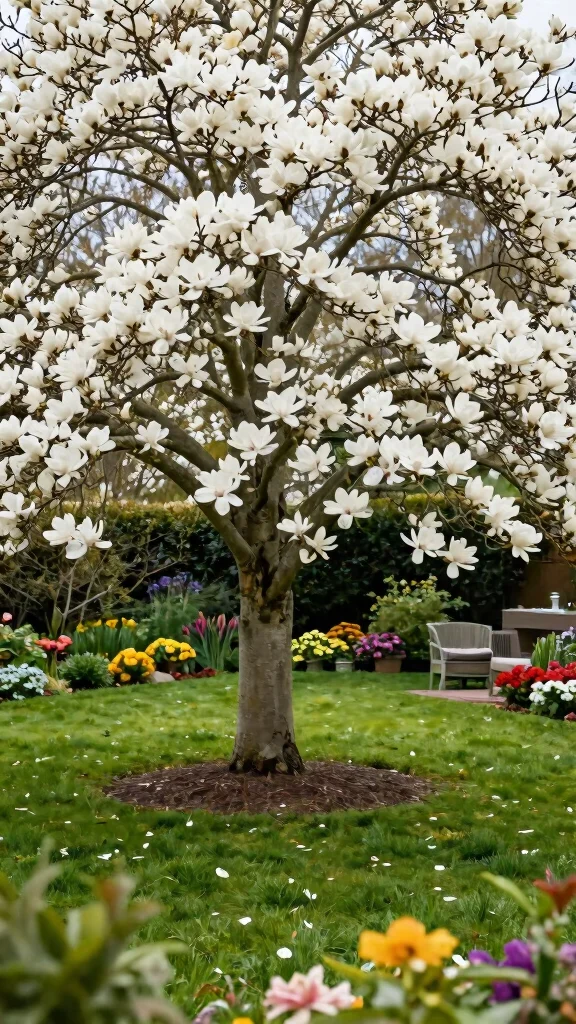
Looking to add a touch of southern charm to your garden? The Magnolia tree is an iconic choice, celebrated for its fragrant, large white flowers that create a stunning focal point. Depending on the variety, magnolias can grow between 15-30 feet tall, providing both shade and beauty.
These trees thrive in full sun and well-drained soil, making them perfect for sunny spots in your garden. The glossy leaves stay attractive year-round, while the spring flowers add elegance and fragrance to your outdoor space. Magnolias are easy to maintain, needing little more than occasional pruning to shape their growth.
Highlight the beauty of Magnolias:
– Create a striking focal point with fragrant blooms.
– Enjoy year-round appeal with glossy leaves.
– Require minimal maintenance for busy gardeners.
– Attract pollinators, enriching your backyard ecosystem.
This tree not only enhances your garden’s aesthetic but also brings a sense of peace and beauty to your outdoor retreat.
Magnolia: Southern Charm
Editor’s Choice

Perfect Plants Jane Magnolia Live Plant, 3 Gallon, Includes Care Guide
Long Needle Pine Straw Mulch – 65-80 Sqft Coverage 1 Set – Premium USA H…
Conclusion

Embracing these seven backyard tree landscaping ideas can truly transform your outdoor living space. Each tree brings its own unique charm, providing shade and enhancing the garden’s aesthetics. From the vibrant blooms of the Flowering Dogwood to the cascading leaves of the Laceleaf Maple, these trees not only elevate the look of your backyard but also create inviting areas for relaxation and enjoyment.
Consider adding one or more of these beautiful shade trees to your garden for a delightful blend of beauty and functionality.
Note: We aim to provide accurate product links, but some may occasionally expire or become unavailable. If this happens, please search directly on Amazon for the product or a suitable alternative.
This post contains Amazon affiliate links, meaning we may earn a small commission if you purchase through our links, at no extra cost to you.
Frequently Asked Questions
What are the best backyard trees landscaping options for shade in a small backyard?
For a small yard, choose trees that give shade without overpowering the space. Look for dwarf or columnar shade trees that fit your footprint and check the mature height and spread to avoid crowding patios or structures. Prefer deciduous varieties for seasonal sun in summer and light in winter, or evergreen types for year‑round cover in milder climates. Consider root systems and planting distance from foundations, sidewalks, and utilities to prevent future issues. Pair two or three trees with layered plantings for constant interest, and you’ll boost garden aesthetics and outdoor living as part of your backyard trees landscaping plan.
How can shade-providing trees be integrated into a cohesive landscape design for outdoor living spaces?
Start by mapping zones: a shady seating area, a shaded path, and a focal tree as a centerpiece. Use layering (tall canopy, mid-story, groundcover) to add depth and texture for better landscape design and garden aesthetics. Choose contrasting textures and colors—glossy leaves with interesting bark, spring blooms with evergreen structure—to keep your space engaging year-round. Place trees to shade the hot afternoon sun while preserving views, and link elements with repeat plantings to unify the space for comfortable outdoor living.
What maintenance steps are essential to keep shade trees healthy in small yards?
Keep trees thriving with a simple routine: deep, infrequent watering during dry spells; a generous mulch ring (pull mulch a few inches away from the trunk to prevent rot); timely pruning to remove deadwood and shape the canopy without over-pruning; regular checks for pests and disease; and periodic soil or tree health assessments, especially if you notice slow growth or leaning. If needed, apply fertilizer only after a soil test indicates a deficiency. All of this falls under tree maintenance and helps sustain landscape design and backyard trees landscaping goals for healthy shade and structure.
When planning for color, texture, and structure, which tree choices deliver year‑round beauty in a small backyard?
Aim for a mix of evergreen and deciduous options that deliver ongoing structure and seasonal drama. A well‑placed canopy tree provides silhouette and shade; add an ornamental tree for spring flowers and texture; choose a species with striking fall color or interesting winter bark for seasonal highlights. Balancing garden aesthetics with outdoor living needs ensures you enjoy year‑round beauty, while keeping the planting plan clean and scalable within your backyard trees landscaping goals.
Are there common mistakes to avoid when choosing and planting shade trees for a tiny footprint backyard?
Yes—common pitfalls include underestimating the mature size and planting too close to your house or utilities, ignoring root zones and drainage, selecting trees poorly suited to your climate or soil, and forgetting about long‑term maintenance. Another mistake is neglecting how the canopy will affect outdoor living spaces. To avoid these, measure space carefully, choose compact cultivars, provide adequate spacing for roots, ensure good drainage, and plan for ongoing maintenance as part of your landscape design and backyard trees landscaping strategy.
Related Topics
backyard trees landscaping
shade trees
ornamental trees
landscape design
garden aesthetics
outdoor living
tree maintenance
small backyard ideas
easy landscaping
seasonal planting
beginner friendly
eco-friendly gardens